
Movement, training and studio spaces
Gym and Studio Mirrors
A guide to planning mirror walls and made-to-measure mirrors for gyms, dance studios, Pilates rooms, yoga spaces, personal training rooms and home fitness areas.
Use this hub to understand wall preparation, panel layout, safety, access, obstacles and the differences between commercial studio and home gym mirror projects.

Choose the Right Gym or Studio Mirror Page
This hub covers the shared planning issues. The specialist pages below focus on the spaces most likely to match your project.
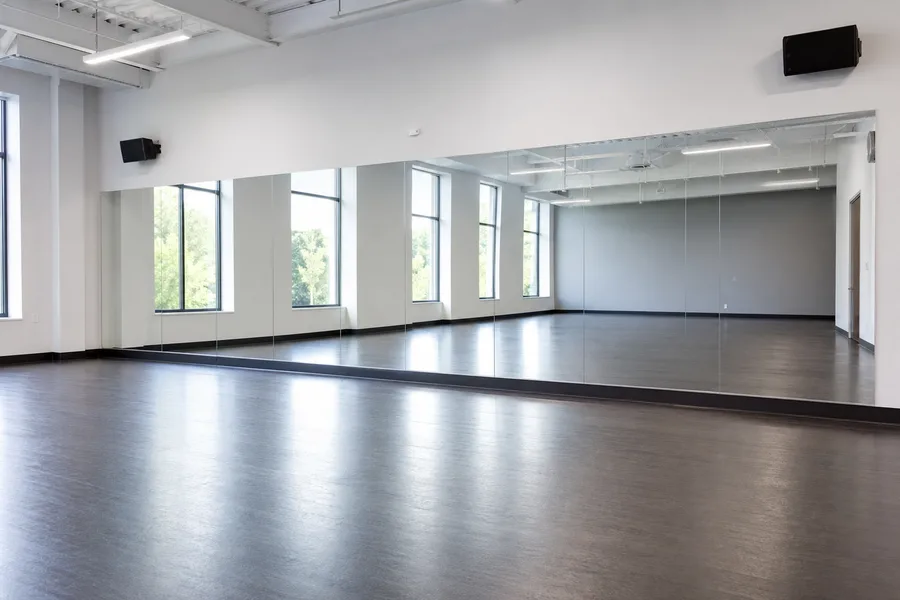
Dance Studio Mirrors
For dance schools, rehearsal rooms, performing arts spaces, studios with barres and full movement walls.
View dance studio mirrorsHome Gym Mirrors
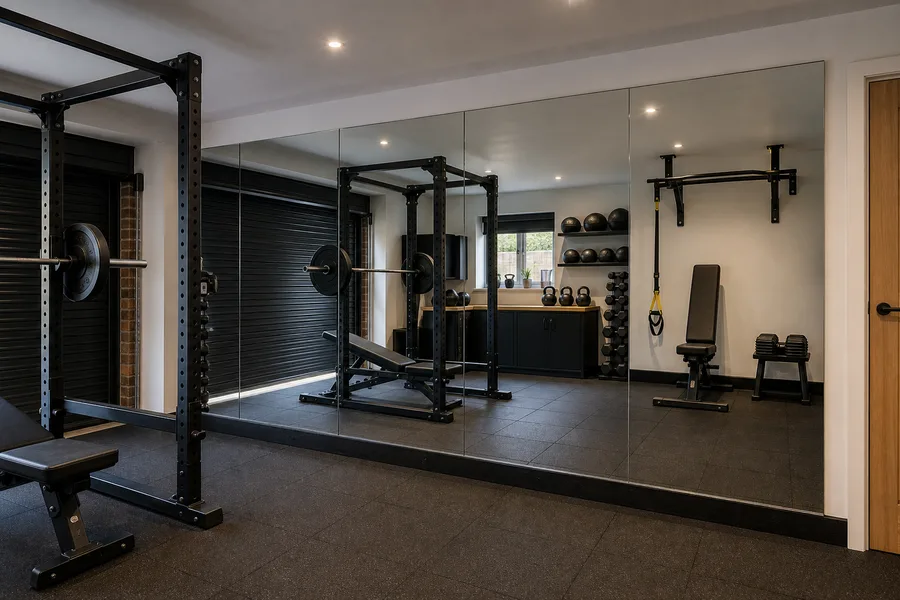
For garage gyms, spare rooms, outbuildings, personal fitness rooms and home weight-training areas.
View home gym mirrorsPilates and Yoga Studio Mirrors
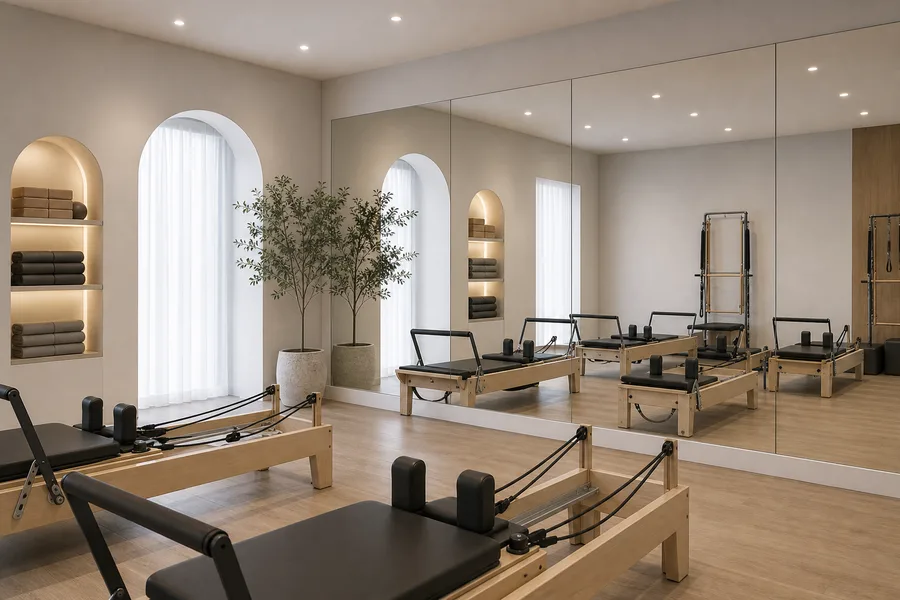
For reformer Pilates studios, barre spaces, yoga rooms, wellness studios and controlled movement spaces.
View Pilates and yoga mirrorsCommercial Installation
For wider commercial mirror projects, mixed-use facilities, salons, retail, offices and hospitality areas.
View commercial installationPlanning a Mirror Wall for Movement or Fitness
Gym and studio mirrors are usually larger and more functional than decorative mirrors. They need to help people see posture, movement, form, alignment or technique without creating a distracting layout. That makes panel height, wall position, joins and reflections important.
A dance studio may need a wide mirror run across the main practice wall. A Pilates studio may need a calmer mirror layout around reformers, barres and teaching positions. A home gym may need mirrors around equipment, sockets and uneven garage or outbuilding walls. The best layout depends on how the space is actually used.
- Dance and rehearsal rooms: prioritise clear sightlines, full-body reflection and enough width for group practice.
- Commercial gyms: consider equipment positions, impact zones, access routes, sockets and lighting reflections.
- Pilates, yoga and barre: consider calm presentation, instructor visibility, reformer layout, wall rails and storage.
- Home gyms: consider garage walls, outbuildings, skirting, sockets, ceiling height and safe delivery access.
Key Installation Considerations
Wall preparation
The wall should be suitable for the planned mirror size and fixing method. Uneven surfaces, damp areas, old finishes and fresh plaster can affect the approach.
Panel height
Height depends on room use. Full-body movement spaces often need a different mirror height than a compact home gym or reformer studio.
Panel joins
Large walls normally use multiple panels. The layout should avoid awkward join positions where people most need a clear reflection.
Obstacles
Barres, sockets, switches, radiators, skirting boards, rails, equipment and wall-mounted storage should be identified before quoting.
Safety and use
Busy movement spaces may need safety considerations beyond appearance, especially where groups, equipment or public use are involved.
Access
Large mirror panels need safe handling. Parking, stairs, corridors, lifts, doorways and working hours can all affect installation planning.
Gym and Studio Mirror Ideas
These existing Mirrorworld site assets show the kinds of spaces covered by this hub. Where a photo has not been separately verified as a completed project, it should be treated as a project-style visual guide.
Typical Gym and Studio Mirror Process
1. Share the room use
Tell us whether the space is a dance studio, gym, Pilates room, yoga space, garage gym or mixed-use room.
2. Send wall sizes
Approximate width, height and photos help identify the likely panel layout and any obvious constraints.
3. Check obstacles
List sockets, switches, barres, rails, radiators, skirting boards, equipment and any wall features.
4. Confirm access
Large panels need clear access, so stairs, lifts, parking, doorways and room access should be considered early.
5. Plan the panels
Panel sizes and joins are planned around the room, wall length and intended use of the mirror wall.
6. Install where suitable
Where fitting is included, installation is coordinated around the site, room availability and handling requirements.
Questions to Answer Before Requesting a Quote
Room and use
- What will the space be used for?
- How many people use the room at once?
- Is it a commercial studio or home space?
- What is the project postcode?
Wall and mirror details
- Approximate width and height of the mirror wall.
- Photos of the wall and the route into the room.
- Any sockets, barres, equipment or fittings.
- Whether you need supply only or supply and fitting.
Gym and Studio Mirror FAQs
What mirrors are best for gyms and studios?
Most gym and studio projects use made-to-measure wall mirrors planned around the room, wall size and intended activity.
Can a mirror wall cover a full studio wall?
Often, yes, but larger runs usually need multiple panels. Join positions and wall condition should be planned carefully.
Are home gym mirrors different from commercial gym mirrors?
The planning principles are similar, but home gyms often have tighter access, garage walls, outbuildings, sockets and equipment to work around.
Can mirrors be fitted above skirting boards?
In many cases, yes. The final approach depends on the wall, skirting, desired height and fixing method.
Can you fit mirrors around a ballet barre?
Barres and wall fixings need to be considered early so the mirror layout and fixing points can be planned properly.
Do yoga studios need mirrors?
Some yoga spaces prefer mirrors for alignment and teaching, while others use them more sparingly. The layout should suit the atmosphere and use of the room.
Can you quote from photos?
Photos and approximate measurements are a good starting point. A survey may be needed for larger or more complex projects.
What information should I send?
Send the room type, postcode, wall size, photos, obstacles, access details and whether the space is commercial or domestic.
Request a Quote for Gym or Studio Mirrors
Tell us what type of movement or training space you are planning, the approximate mirror wall size, and any photos or obstacles you already know about.